
The Escalating Crisis in Iran: Understanding the Unrest and Potential Outcomes
Introduction
What began as demonstrations over economic grievances has rapidly escalated into a crisis of legitimacy for the Islamic Republic of Iran. As discontent swells among the population of 93 million, the anti-government unrest that started on December 28 has sparked widespread protests, prompting external figures like former U.S. President Donald Trump to encourage the Iranian populace to “keep protesting and take over state institutions.”
Brutal State Response
The Iranian government’s response has been severe, with human rights organizations reporting alarming death tolls. The U.S.-based human rights monitor HRANA claims around 2,500 protesters have been killed, while Iran International, a London-based anti-regime journalism group, estimates the number could be as high as 12,000. As the violence escalates, questions arise regarding the future leadership of Iran if the current regime were to collapse.
Who Holds Power in Iran?
Iran has been under the Islamic Republic’s rule since the 1979 revolution that overthrew the U.S.-backed monarchy. The ultimate political and religious authority is held by the Supreme Leader, Ayatollah Ali Khamenei, supported by powerful clerical bodies that oversee pivotal institutions, including the judiciary and military. Alongside these religious authorities, Iran has elected entities like the president and the parliament. However, candidates must be vetted by the Guardian Council, which limits political diversity and often excludes those deemed disloyal.
Despite the ongoing unrest, analysts suggest that the regime’s core institutions remain aligned and functional, making a swift collapse unlikely in the short term. Protests may demand regime change, but institutional strength has historically helped quell movements in the past.
Fragmented Opposition Landscape
Even in the event of a successful uprising, numerous experts express concern over the Iranian opposition’s fragmentation. Different groups pursuing varying goals complicate the quest for a unified leadership. Many opposition figures lack notable support, and decades of repressive measures against dissent have marginalized potential leaders.
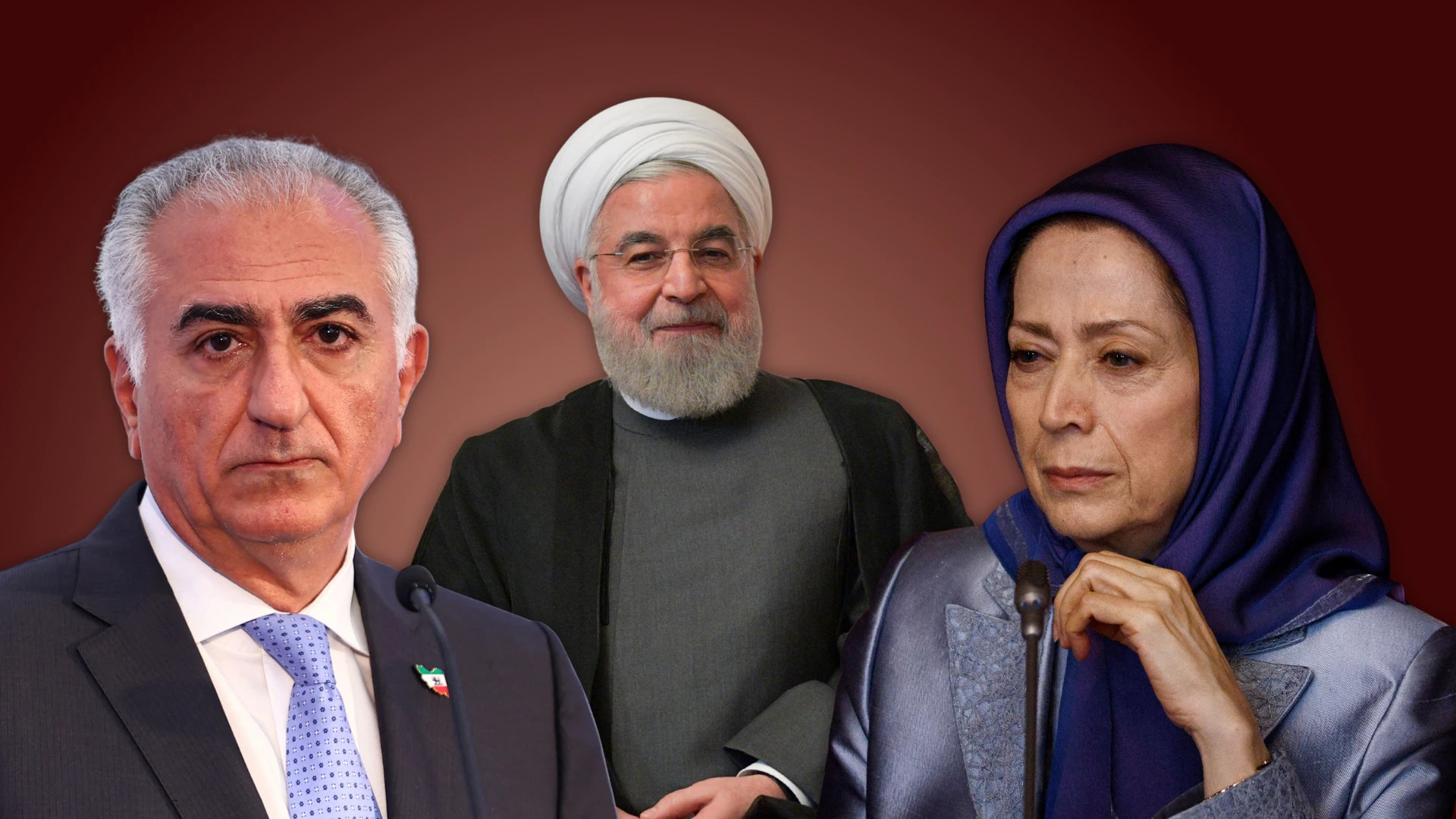
The two most referenced opposition factions are located outside Iran: the monarchists and the People’s Mojahedin Organization (PMO), both of which have complex and often controversial histories.
The Exiled Prince
One frequently mentioned potential leader is Reza Pahlavi, the former crown prince. At 65, he has lived in exile since his father was overthrown. Pahlavi has proposed acting as a transitional figure and aims to unify Iran’s democratic forces. His potential candidacy, however, is met with skepticism; many Iranians remain wary of a monarchy due to the historical burdens associated with it. For example, U.S. President Trump expressed doubts about Pahlavi’s ability to garner widespread support within Iran, highlighting a broader apprehension about foreign influence in the opposition.
The Leftist Dissident: Maryam Rajavi
Maryam Rajavi, leader of the PMO, is another significant figure who believes in the necessity of internal change and has rallied behind the idea of organized resistance against the current regime. While she rejects external intervention, her faction has its own controversial past, having previously been labeled a terrorist organization. The PMO has sought to position itself as proactive in recent protests, focusing on a transitional government aimed at fostering a democratic and secular Iran.
The Former President: Hassan Rouhani
Hassan Rouhani, Iran’s former president, has also surfaced as a possible leader. Though a relative moderate during his presidency, he faces skepticism. Many Iranians perceive his previous involvement in the regime as insufficiently transformative, yearning instead for a complete overhaul rather than a continuation of the same leadership styles.
The Role of Foreign Influence
The intersection of international politics adds another layer of complexity to the Iranian situation. Some factions within Iran’s middle class express reluctance to support protests perceived as being backed by foreign powers, notably the United States and Israel. The historical repercussions seen in Iraq, Syria, and Afghanistan contribute to a cautious perspective on foreign intervention, even among those dissatisfied with the current regime.
Future Prospects
Moving forward, what transpires will hinge on the regime’s ability to regain control or if fissures within its ranks begin to expand. Key indicators might include divisions among the security forces or serious political splits within the regime. For any significant change in power dynamics, observers believe that a loss of support from these institutions will be critical.
Experts like Kylie Moore-Gilbert and Ali Mamouri caution against premature conclusions, acknowledging that while the Iranian populace’s frustrations are profound, the path to meaningful change is fraught with uncertainties. Engaging with the Iranian people’s aspirations for change and discussing new futures will remain a significant task for all involved, both domestically and internationally.