
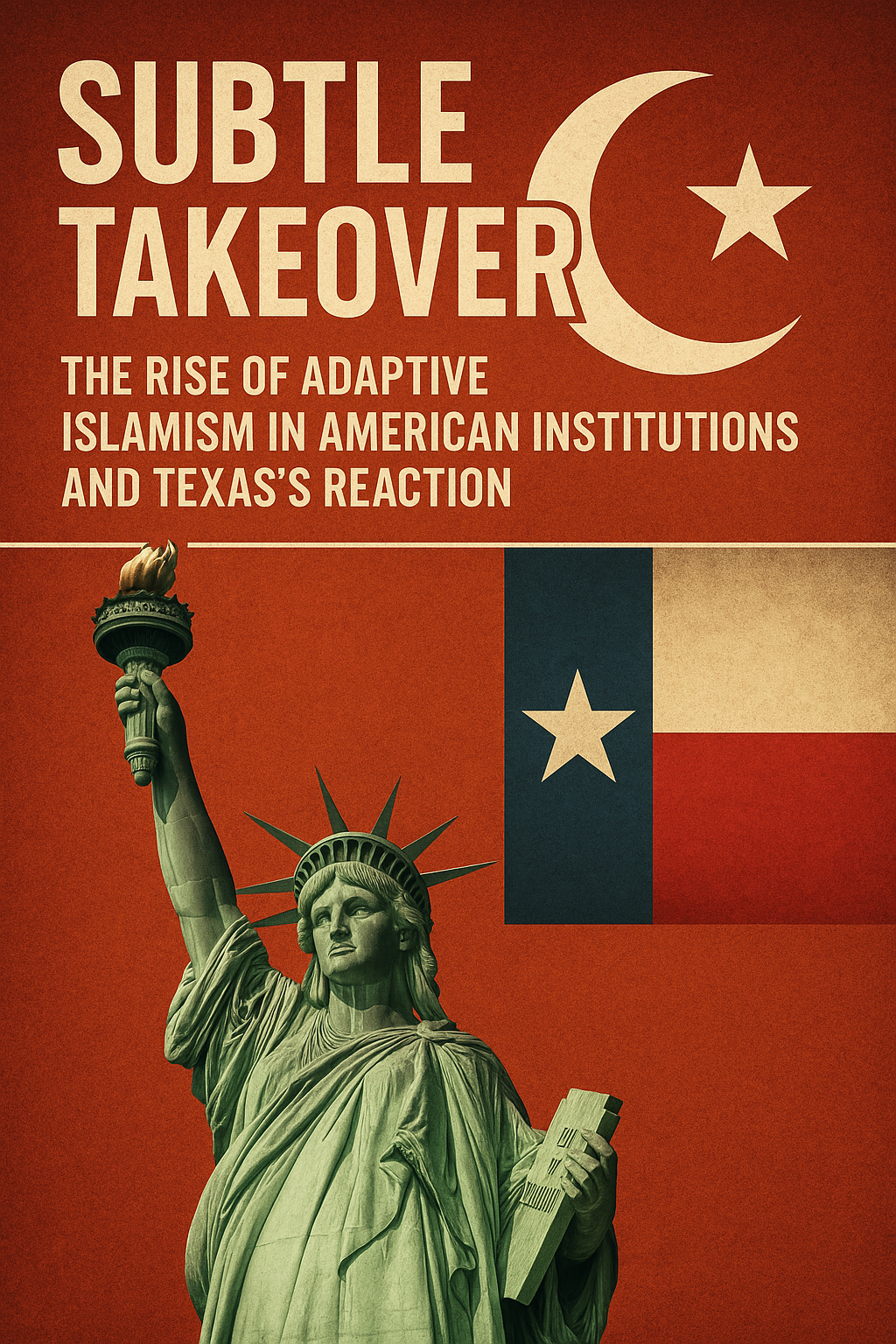

Understanding Political Islam in the United States: A Deep Dive
The United States is navigating a challenging new landscape in its relationship with political Islam. Historically, Washington primarily viewed Islamism through the lens of counterterrorism, equating the absence of violence with a lack of threat. However, as Europe’s experience has shown, nonviolent Islamism can be just as enduring, often working within democratic frameworks rather than opposing them outright. This adaptive strategy is now observable in the United States, and the parallels are increasingly evident.
The Nature of Modern Islamism
Modern Islamism does not seek to replace state systems through overt violence. Instead, its strategy is to subtly transform institutions from within by translating religious identity into political authority. This movement skillfully utilizes the liberal democracy’s protections, leveraging civic participation and cultural legitimacy to propagate a political ideology that ultimately challenges the very tenets of pluralism. Its goal transcends mere representation; it aims for primacy in the political arena.
Once it establishes a foothold in institutions, Islamism deepens its influence through continuity instead of confrontation. The result is a parallel civic structure that competes with—and, in some cases, seeks to redefine—the American model of governance. This approach allows it to advance through legitimacy rather than subversion, gradually reshaping expectations about representation and authority in profound and often subtle ways.
Case Study: Dearborn, Michigan
A poignant illustration of this strategy can be seen in Dearborn, Michigan, home to one of the largest Arab and Muslim populations in the U.S., where over 40% of the residents identify as Arab American and mostly Muslim. The events surrounding the 2022 school board upheaval highlight how ideological networks can significantly influence local governance.
The cultural clash started when conservative religious parents protested the availability of books in school libraries that dealt with LGBTQ+ themes and explicit content, claiming they were incompatible with their values. This dissent sparked intense confrontations at school board meetings, leading to the removal or restriction of some of these books. More notably, the mobilization translated into electoral action, resulting in the election of new school board members who aligned with the conservative parent base’s demands.
The situation in Dearborn echoes earlier experiences in Europe, where local battles over education and public service norms became early platforms for Islamist political consolidation.
University Campuses: A Growing Arena
The university system has also emerged as an arena for this ideological reorientation. Established organizations like the Muslim Students Association have evolved into a more extensive ecosystem where religious identity politics intersect with Islamist frameworks. Campuses across states like Michigan, New York, California, and Illinois now host a generation of activists who view political Islam through the lens of cultural or anti-colonial narratives instead of governance ideology.
This transformation holds long-term implications, as students shaped in this environment often progress into influential roles in nonprofits, civil rights organizations, media outlets, and local governments. They carry with them a worldview that normalizes Islamist political concepts, further embedding them within American institutions.
The Nonprofit Sector: An Intricate Landscape
Adding another layer of complexity, many nonprofit organizations, previously scrutinized by authorities, have demonstrated remarkable resilience. Following scrutiny, they have emerged with renewed legitimacy, often capitalizing on procedural protections within the opaque charitable regulatory framework. This creates an environment where ideological movements can secure funding and institutional continuity while presenting themselves as community representatives—even when their goals may diverge from the broader Muslim American sentiment.
Explicit Islamist movements, such as Hizb ut-Tahrir America, highlight another dimension of this narrative. While nonviolent, these groups openly advocate for replacing secular governance with a religious political framework, showcasing the permissive environment that Islamist movements have managed to navigate.
Heightened Political Tensions: Responses and Reactions
Recent activities of various groups have elicited sharp responses from political leaders, escalating tensions. For instance, on November 18, Texas Governor Greg Abbott designated the Council on American-Islamic Relations (CAIR) and the Muslim Brotherhood as Foreign Terrorist Organizations (FTOs) under Texas law. He argued that this action was necessary due to the groups’ alleged support for terrorism globally and efforts to undermine local laws through intimidation.
Abbott’s designation prohibits these organizations from acquiring property within Texas, allowing the state’s attorney general to initiate legal actions against affiliated entities. This represents a significant escalation in Abbott’s confrontational stance toward Muslim organizations and communities in Texas.
The legal authority for such designations, however, raises questions since only the U.S. Secretary of State can officially classify organizations as FTOs under federal law. Consequently, the implications of Abbott’s actions are confined to Texas law enforcement, lacking the broader effects attached to legitimate federal FTO designations.
The Role of Media and Public Perception
As these developments unfold, organizations like CAIR consistently reject accusations linking them to terrorist activities, labeling opponents as “Israel First politicians” promoting anti-Muslim hysteria. They also highlight their track records in legal actions against mischaracterizations and First Amendment violations.
Highlighting Abbott’s recent comments, which characterized a proposed 400-acre Muslim community development near Dallas as a “sharia compound,” illustrates the underlying tensions. His assertions suggest a controversial narrative framing Islamism as an imposition rather than a multifaceted part of American discourse.
The Current Landscape of Islamism
Today, Islamism in the United States has evolved into a concrete political player, operating within various structures, including community organizations, educational institutions, and government entities. The understanding of its adaptive strategies and the varied responses they provoke is crucial for ensuring a genuinely pluralistic civic landscape that respects the myriad identities and beliefs that make up American society. The discussion surrounding Islamism is no longer an abstract academic debate; it is a pivotal factor in the ongoing dialogue about the future of governance and representation in America.
This exploration emphasizes the necessity of a nuanced understanding of Political Islam and its implications for American democracy. The dynamics at play are complex and demand careful consideration and dialogue as the nation moves forward.