
Tensions in the Middle East: Iran’s Warning and Global Reactions
DUBAI — In a tense and rapidly evolving situation, Iran’s Supreme Leader, Ayatollah Ali Khamenei, issued a stark warning on Sunday, stating that any military attack by the United States would ignite a “regional war” in the Middle East. This warning comes amidst escalating tensions as President Trump has threatened military action in response to Iran’s violent crackdown on nationwide protests that have resulted in significant loss of life.
The Context of Khamenei’s Threat
Khamenei’s comments are particularly striking given the current presence of the USS Abraham Lincoln and its accompanying warships in the Arabian Sea, a move orchestrated by the Trump administration following reports of Iran’s brutal suppression of protests. The unrest, which erupted in late December over economic grievances, has evolved into widespread dissent against Khamenei’s government, drawing an aggressive response from security forces.
While the fear of military confrontation looms, it remains uncertain whether Trump will indeed authorize the use of force. The President has repeatedly indicated a desire for negotiations with Iran, particularly focusing on Tehran’s contentious nuclear program, underscoring a complex geopolitical landscape.
The Violent Crackdown on Protests
The Iranian government’s reaction to the protests has been severe. Thousands have been detained, with Amnesty International citing over 49,500 arrests and a death toll that has reportedly reached over 6,700—predominantly among demonstrators. The official Iranian government figures, however, present a much lower casualty count and have been viewed with skepticism, raising further concerns about the potential for mass executions in response to the unrest.
Khamenei has characterized the protests as an attempted coup, reinforcing the regime’s hardened stance against dissent. He emphasized the government’s narrative that the protests were an orchestrated attack aimed at destabilizing essential institutions, reflecting the ruling elite’s apprehension about losing control.
Military Maneuvers and Strategic Significance
Adding fuel to the fire, Iran has scheduled live-fire military drills in the strategic Strait of Hormuz, a critical chokepoint for global oil transportation. The U.S. Central Command has issued warnings against any threatening maneuvers directed at American naval forces during these exercises, indicating the potential for confrontations in already volatile waters.
During a speech marking the anniversary of the 1979 Islamic Revolution, Khamenei reinforced his defiant stance against the U.S., portraying American interests in Iran as greedy attempts to regain control over its natural resources. This rhetoric resonates with historical grievances and aims to galvanize national unity against perceived external threats.
Escalating Regional Rhetoric
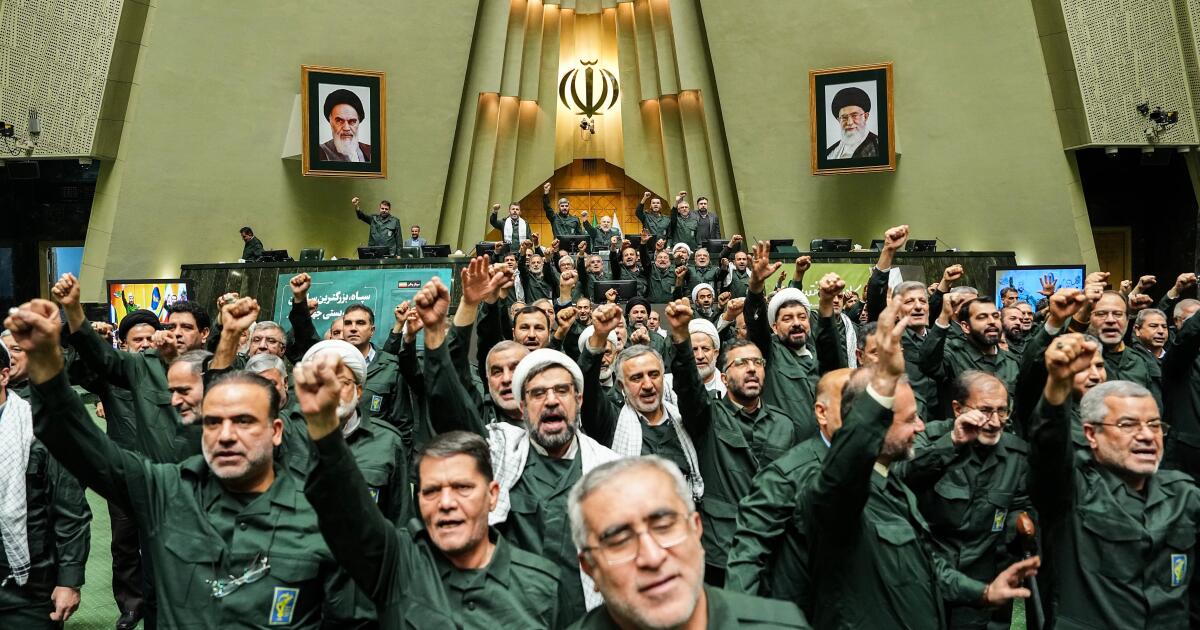
The Iranian parliament has also escalated rhetoric against the European Union. Following the bloc’s designation of Iran’s paramilitary Revolutionary Guard as a terrorist organization, parliament speaker Mohammad Bagher Qalibaf declared all EU militaries to be terrorist entities as well. Dressed in Revolutionary Guard uniforms, Qalibaf’s pronouncement reflects a symbolic defiance against Western designations, emphasizing a narrative of victimhood while bolstering domestic solidarity among Iranian hardliners.
The parliamentarians’ chants of “Death to America!” and “Death to Israel!” during the session exemplify the heightened anti-Western sentiment and a rallying cry against foreign intervention and influence.
Trump’s Stance and Future Prospects
President Trump has articulated clear red lines regarding military action against Iran: the killing of peaceful protesters or mass executions of the detained. His administration’s nuanced approach has increasingly focused on Iran’s nuclear ambitions, with Trump hinting at the necessity for a comprehensive agreement to prevent nuclear proliferation.
In recent remarks, Trump noted that Iran is engaging in “serious talks” with the U.S., although he remains non-committal about future military decisions. This layer of diplomacy intertwined with the threat of military action adds to the complexity of the situation, leaving many observers questioning what path the U.S. might take next.
Conclusion
The tensions between the U.S. and Iran highlight a critical time in Middle Eastern geopolitics, where domestic unrest and international relations intertwine in unpredictable ways. As Iran faces internal dissent and external pressure, the global community watches closely, aware that any misstep could lead to far-reaching consequences for the entire region. The unfolding drama is a stark reminder of the fragile state of peace and security in one of the world’s most tumultuous areas.